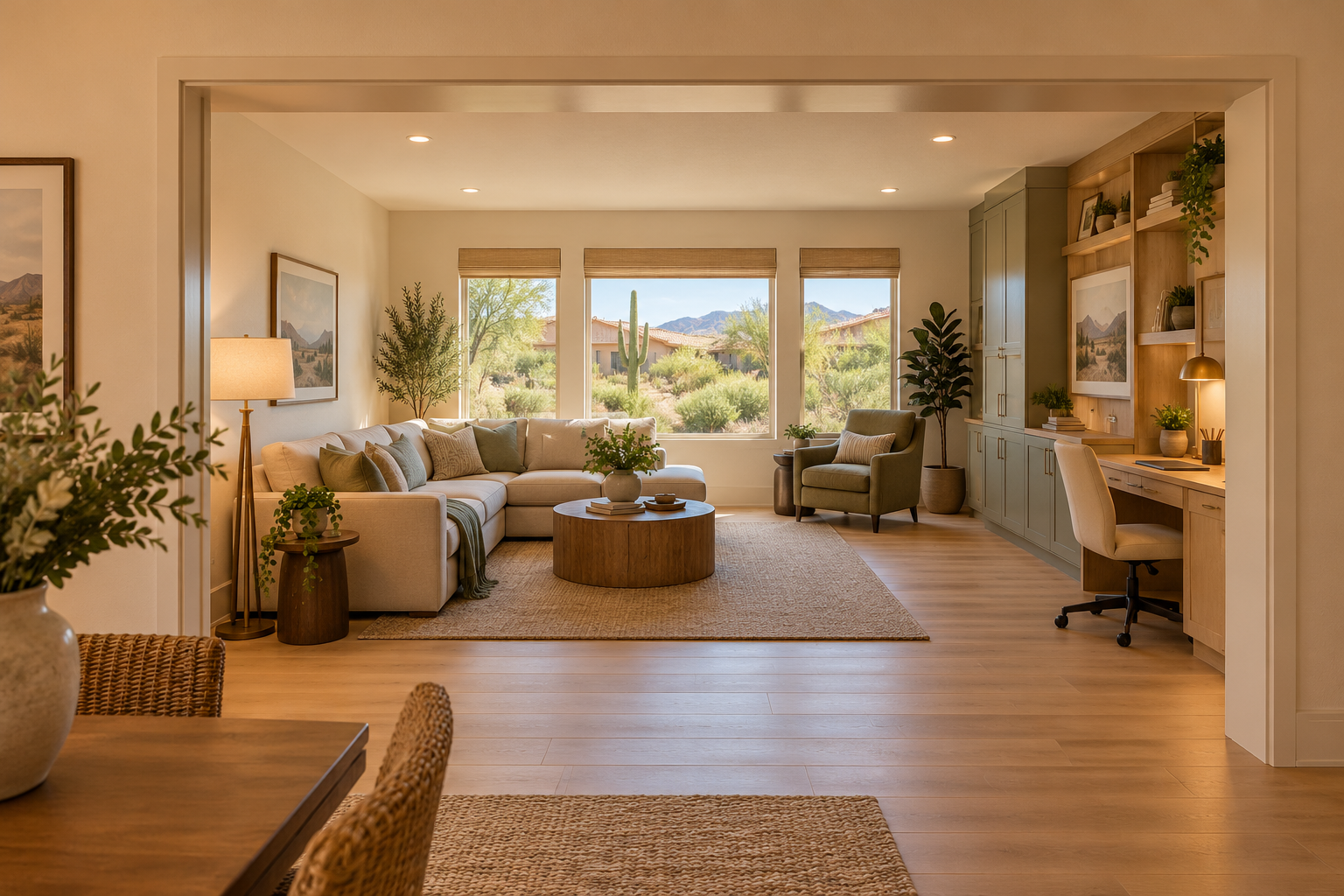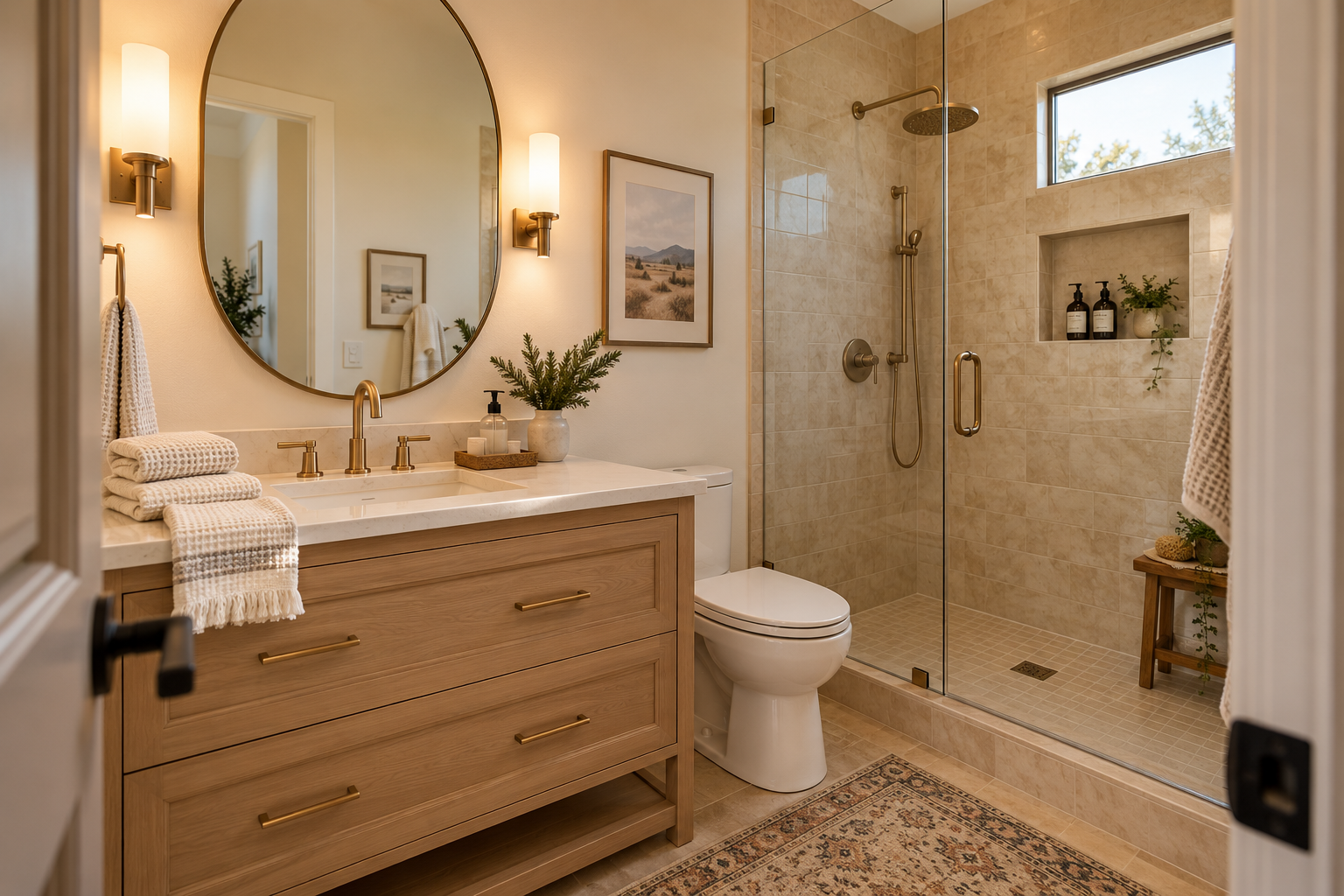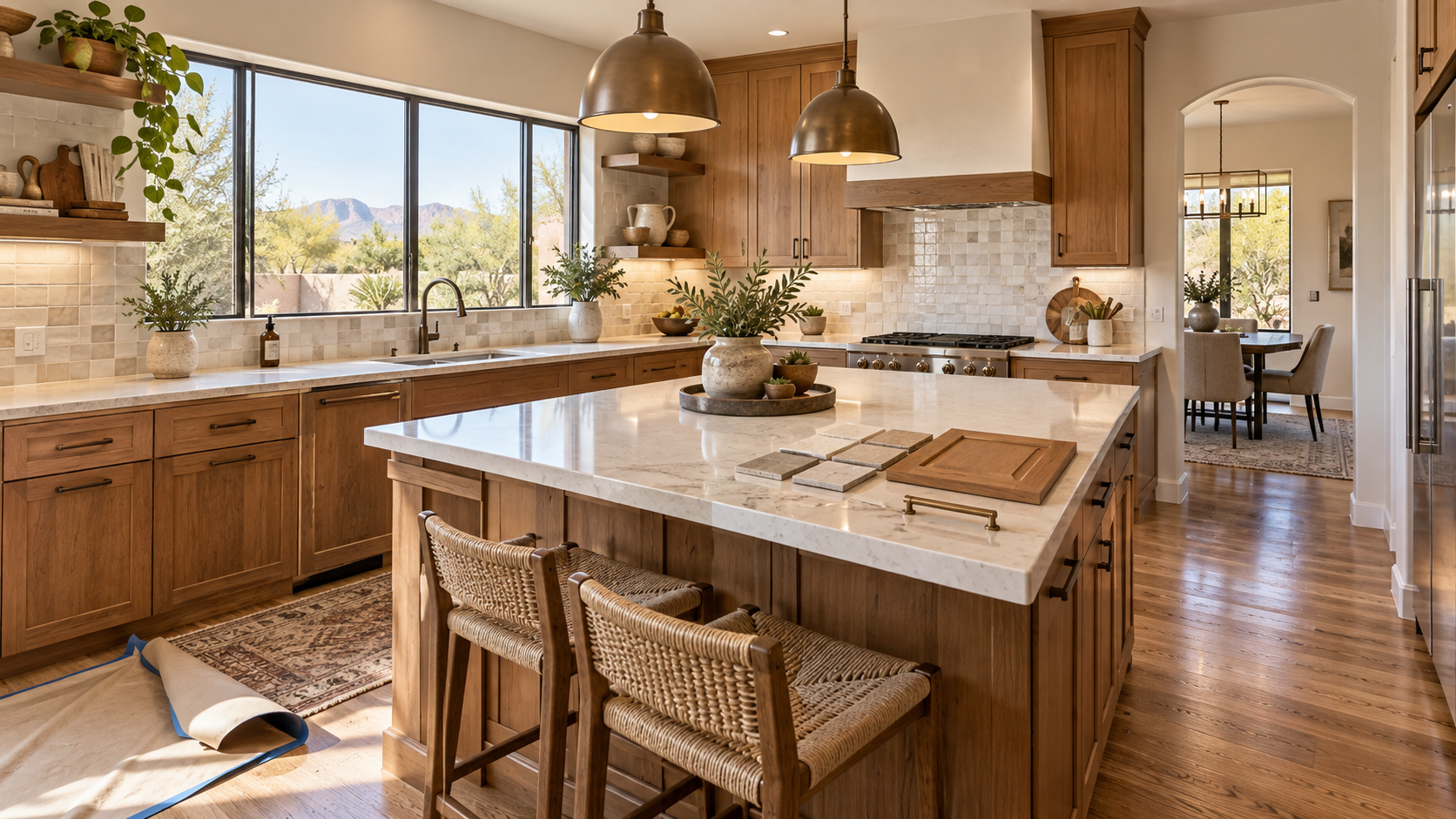
When homeowners picture a remodel, they often imagine the dramatic part first: cabinets coming down, flooring coming up, tile being removed, and a dumpster filling quickly.
Sometimes that is exactly what the project needs. But not always.
A good remodel is not measured by how much gets demolished. It is measured by how well the finished space works, how safely it is built, and whether the money was spent where it made the greatest difference.
That is why one of the most useful questions you can ask during the planning stage is simple: Can we save that?
The answer depends on more than whether something still looks decent. A contractor has to consider condition, function, compatibility, labor, code requirements, and the bigger design plan before recommending that an existing feature stay or go.
Saving Something Is Not the Same as Settling
Keeping part of your home can be a smart design and budget decision. Maybe the cabinet boxes are solid, the flooring is in excellent condition, or a vintage light fixture gives the room character that a new one cannot replicate.
Preserving those pieces may allow you to put more of the budget toward the changes that truly improve daily life, such as better lighting, added storage, a more functional layout, or updated plumbing and electrical work.
The key is that the item should earn its place in the new design. It should still be sound, useful, and compatible with everything happening around it.
Can the Existing Cabinets Stay?
Cabinetry is often one of the largest expenses in a kitchen remodel, so it makes sense to ask whether the existing cabinets can be refreshed instead of replaced.
If the cabinet boxes are sturdy, the layout works well, and the storage meets your needs, new paint or stain, updated doors, and fresh hardware may create a meaningful transformation. Even smaller changes, such as adding pull-outs or improving interior organization, can make familiar cabinetry work harder.
But there are times when saving cabinets creates more trouble than value. Water damage, warped boxes, failing hinges, poor-quality materials, awkward spacing, and a layout that no longer serves the family can all point toward replacement.
There is also a practical question: will the old cabinets work with the new countertops, appliances, flooring, and electrical plan? If keeping them forces compromises everywhere else, replacement may be the more responsible long-term choice.
What About Flooring?
Existing flooring can sometimes remain, especially when it is in good condition and already fits the new design. But floors connect rooms, which means the decision cannot be made by looking at one small area in isolation.
A contractor will look for wear, moisture damage, uneven areas, loose tiles or planks, failing grout, and problems with the subfloor. We also have to consider height differences and transitions where old flooring meets new materials.
In an open-concept space, patching a small section may sound simple but look obvious when the project is finished. A discontinued product or faded material can make a seamless match nearly impossible. In that case, a broader flooring replacement may create the cleaner and more cohesive result.
On the other hand, beautiful hardwood, well-installed tile, or durable flooring that still performs well may absolutely be worth protecting and designing around.
Tile Can Be Tricky to Preserve
Tile often appears permanent, but saving it during a remodel requires careful evaluation. The tile itself may look great while the surface behind it has problems. Cracked grout, hollow sounds, movement, moisture intrusion, or an outdated waterproofing system can all indicate that replacement is necessary.
Matching tile is another challenge. Even when the same style is still sold, a new production batch may vary in color or size. Older tile may also have years of natural fading that makes a new piece stand out.
If the tile is sound, well installed, and outside the area being reconfigured, it may be possible to leave it in place. If plumbing, walls, cabinets, or fixtures around it are moving, removing the tile may be unavoidable.
This is where an experienced eye matters. The goal is not to save tile at any cost. The goal is to avoid unnecessary demolition without building a new room around an old problem.
Fixtures and Hardware May Have a Second Life
Some fixtures are easy to reuse. A favorite mirror, a quality light fixture, decorative cabinet hardware, or a well-made faucet may fit beautifully into the new plan.
Before reusing anything, we consider its condition, age, finish, dimensions, safety, and compatibility with current connections. Older plumbing fixtures may use more water or need parts that are difficult to find. Electrical fixtures must be safe and appropriate for their location. Hardware has to fit the new doors and drawers without creating extra holes or awkward placement.
There is also the question of cohesion. A fixture can be perfectly functional and still feel disconnected from the new finishes. Our interior design guidance helps homeowners see how the pieces will work together before installation begins.
Sometimes the right answer is to reuse a beloved piece. Sometimes it is to move it to another room. And sometimes it is simply time to let it go.
The Layout May Be the Most Valuable Thing to Keep
Not every remodel needs walls to move.
If the current layout already supports the way you cook, gather, get ready, or move through the home, keeping it may save substantial labor and reduce the need to reroute plumbing, electrical, ventilation, or structural elements.
That does not mean the room has to feel the same. New cabinetry, lighting, flooring, storage, fixtures, and finishes can completely change a space while preserving its basic footprint.
But when the layout is the source of the frustration, keeping it simply because it is there rarely makes sense. A cramped kitchen, an unused tub, poor traffic flow, or storage in all the wrong places may justify a more significant change. For projects that touch several connected spaces, whole-home remodeling can help the plan feel intentional rather than pieced together.
What a Contractor Is Really Evaluating
When we decide whether something can stay, we are looking at several questions at once:
- Is it structurally sound and safe?
- Does it function well for the homeowner?
- Can it integrate cleanly with the new work?
- Will preserving it actually save money after labor is considered?
- Does it support the overall design, or limit it?
- Is it likely to fail soon after the remodel is complete?
That last question matters. Saving an item today is not a win if it has to be removed next year, especially if replacing it later means disturbing new countertops, tile, paint, or flooring.
Sometimes Careful Removal Costs More Than Replacement
Homeowners are sometimes surprised to learn that preservation is not always the less expensive path.
Removing a fragile feature without damaging it, storing it safely, modifying the surrounding materials, and reinstalling it can require more labor than starting fresh. Custom patching and matching may also add time without delivering a truly seamless result.
That does not automatically mean the item should be discarded. Sentimental value, craftsmanship, and character matter. It simply means the decision should be made with a clear understanding of the cost and the finished result.
The Best Remodels Are Selective
Thoughtful remodeling is not about keeping everything or replacing everything. It is about knowing the difference.
We want homeowners to understand why each recommendation is being made. If something can be preserved and still support the project, we will talk about how to protect it and incorporate it. If replacement is the better choice, we will explain what we are seeing and why it matters.
That conversation is part of building a realistic scope, a clearer budget, and a home that feels renewed without losing the parts that were already working.
You can browse recent Integrity Contracting projects to see how different homes call for different solutions. When you are ready to discuss what should stay, what should change, and where your remodeling budget will make the biggest impact, request a free estimate.