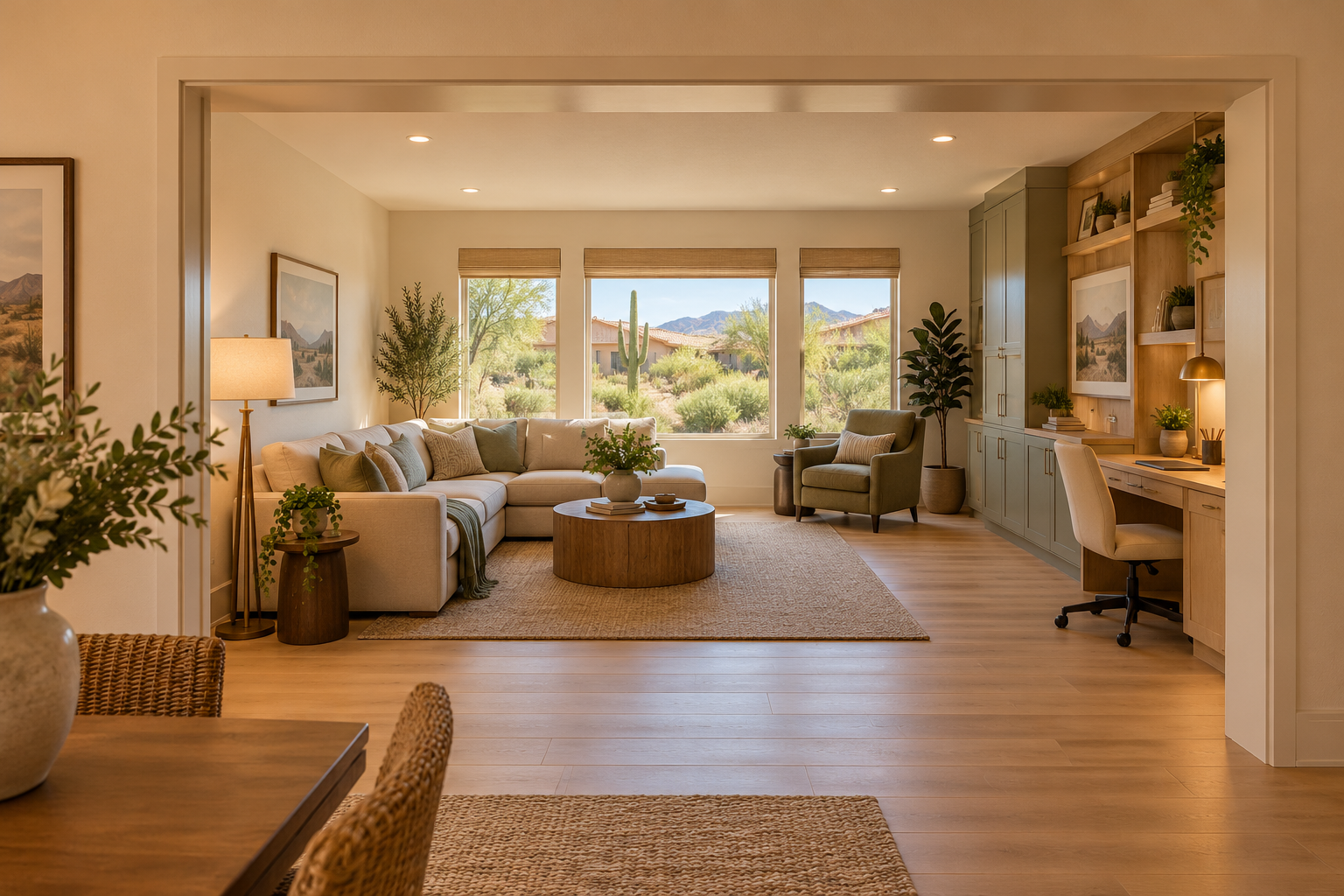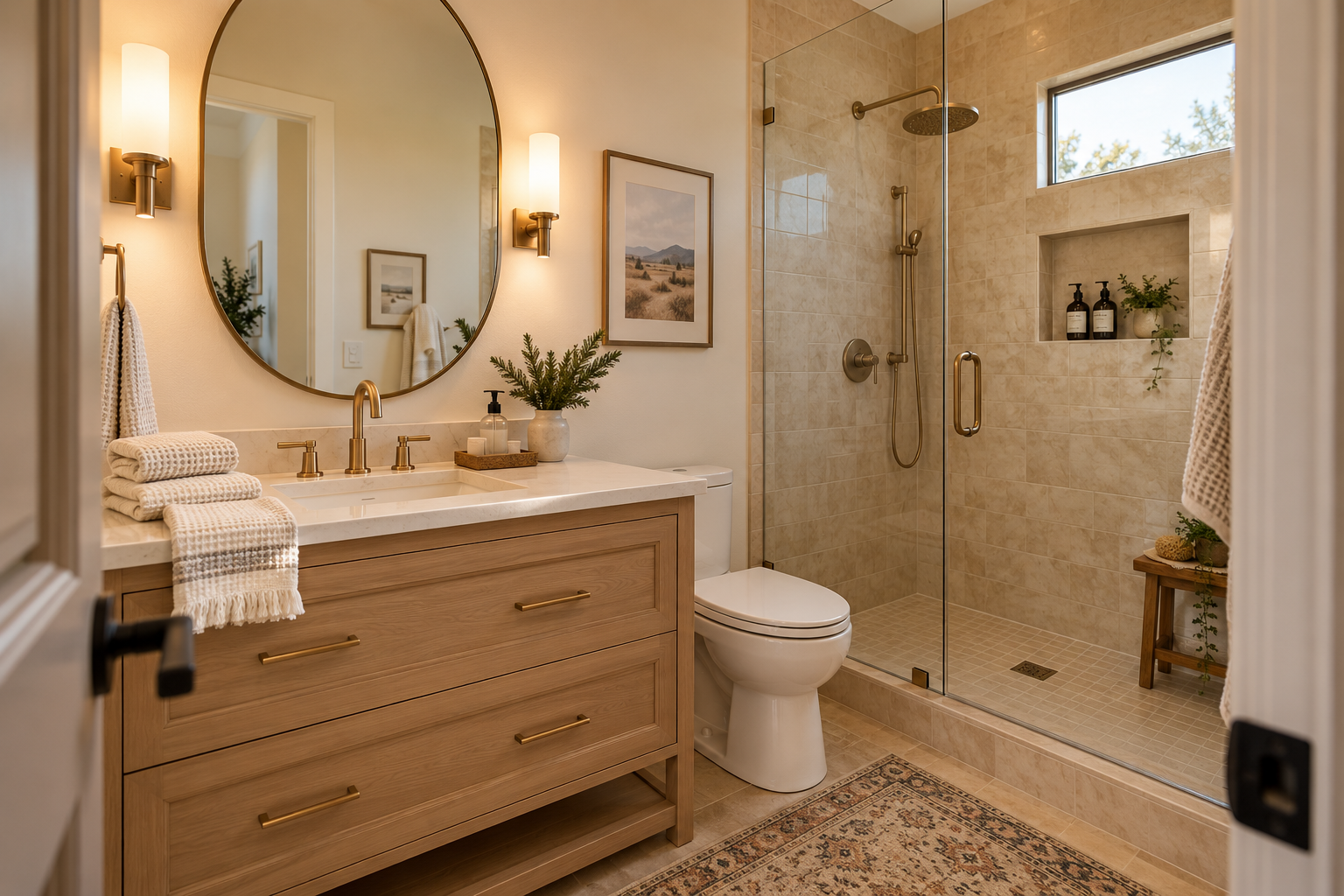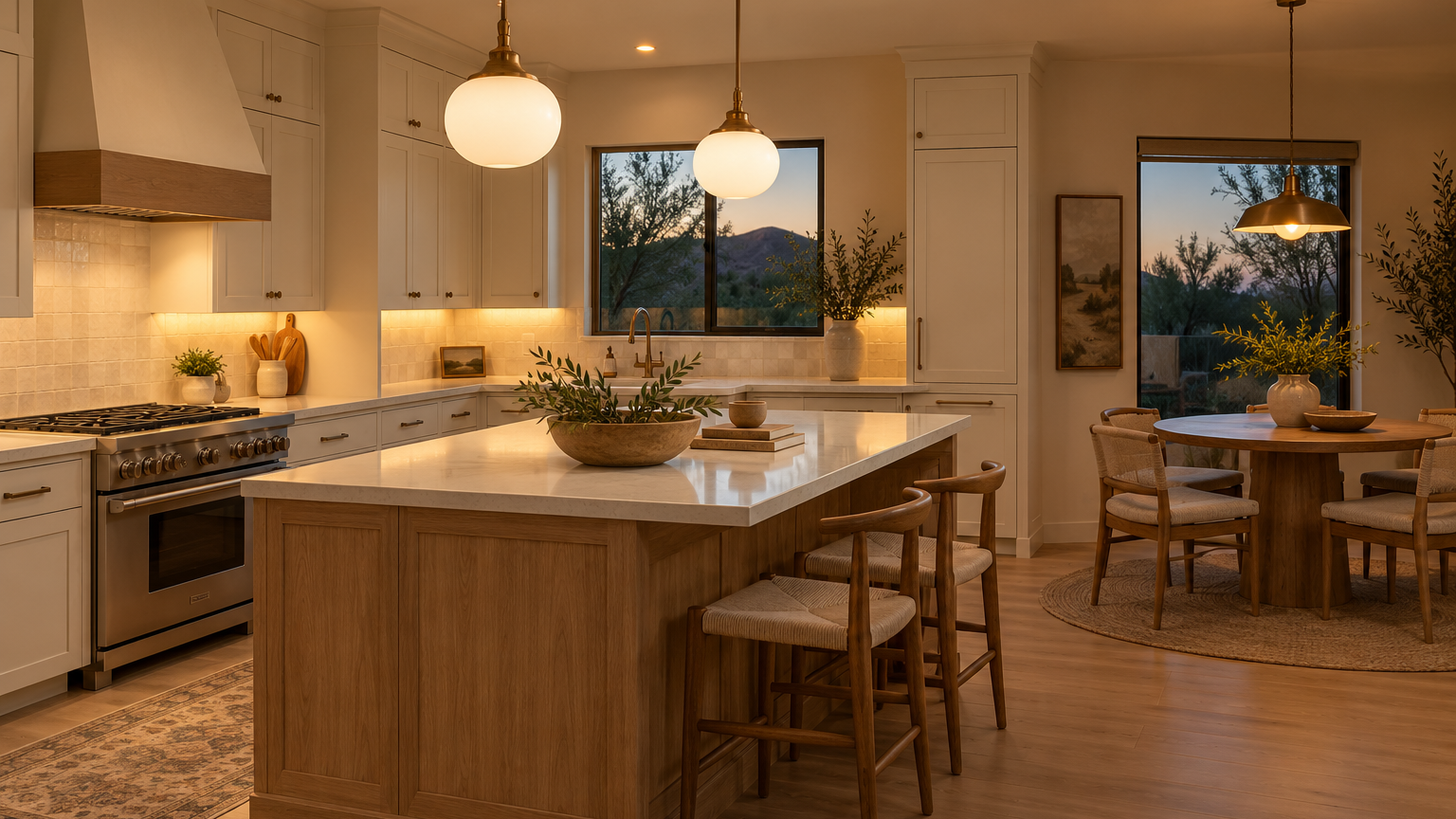
You still like your cabinets. The furniture works. The room does not need to be torn apart. Yet something about it feels tired, harsh, or unfinished.
Look up. That oversized fixture, lonely ceiling light, or row of mismatched bulbs may be influencing the room more than you realize. Updating the lighting can be a useful place to start when you want a different feeling without immediately committing to a larger remodel.
Decide What You Want the Lighting to Do
Before shopping for a fixture, consider what is bothering you. Does the dining light feel dated? Is the countertop difficult to see while you prepare food? Does the living room feel too bright for relaxing but too dim for reading?
Those are different problems. A beautiful chandelier might refresh the dining area, but it will not solve a shadowy kitchen work surface. Start with the experience you want, then choose the lighting to support it.
Integrity Contracting’s interior design guidance considers lighting alongside the layout, finishes, and furnishings so your selections work together.
A New Fixture Can Give a Familiar Room Fresh Personality
A dining fixture often sits right in your line of sight. Replacing one that feels heavy or dated with a style that suits the room can change its character without replacing the table or flooring.
Consider scale as carefully as style. A fixture should relate to the table or island beneath it, the ceiling height, and the surrounding space. A striking piece in a showroom may feel awkward once it is competing with cabinets, sightlines, or nearby fixtures.
The best choice feels like it belongs in your home, rather than looking as though the rest of the room needs to catch up.
Give Each Part of the Room the Light It Needs
One ceiling fixture is often asked to do everything. A more flexible plan uses general lighting for the room, task lighting where you work or read, and accent lighting where you want to draw attention.
In a kitchen, that might mean overhead lighting paired with under-cabinet lighting for the counters. In a living room, lamps can provide comfortable light beside seating while a picture light highlights artwork.
When planning kitchen remodeling, consider where you prepare meals, clean up, and gather. Those activities may need different lighting, even when they happen within a few feet of each other.
The Bulb Is Part of the Design
Replacing a fixture but keeping bulbs that feel too harsh can leave you wondering why the room still does not feel right. Compare brightness and color temperature as part of your selection. Warm-white light may suit a relaxed seating area, while other spaces may call for a different balance.
Test options in the room when possible. The light you choose affects how you see paint, tile, cabinetry, and fabrics. Avoid choosing each bulb independently if several fixtures share the same space.
Dimmers can add flexibility, but compatibility matters. The Department of Energy advises checking that LED bulbs work with the dimming system. Choose compatible components rather than assuming any LED and dimmer will work well together.
An Easy Refresh Still Deserves Proper Planning
Replacing a fixture at an existing location is a different project from adding recessed lights, moving pendants, or installing new wiring. The scope may involve electrical work, ceiling repairs, and painting as well as the fixture itself.
Have electrical changes evaluated and completed by a qualified professional. If a larger home renovation is already planned, make lighting decisions early so wiring and finish work can be coordinated.
Start With the Room You Want to Enjoy More
You do not have to refresh every room at once. Start with the dining area that feels dated, the kitchen corner that stays dark, or the living room you wish felt more welcoming at night.
Contact Integrity Contracting AZ to discuss lighting as part of your interior update or remodeling plan. We can help connect the look you love with the way you actually use your home.
Frequently asked questions
Can new lighting refresh a room without a full remodel?
Yes. A different fixture, more suitable bulbs, or thoughtfully placed lighting can change the room’s appearance and usefulness. If the underlying frustration is layout or storage, lighting may be one part of the solution rather than the whole answer.
Should all the light fixtures in my home match?
They do not need to be identical. Coordinating style, proportions, and finishes can help connected spaces feel intentional while allowing each room its own character. Pay particular attention to fixtures you can see together.
Can I add a dimmer to my existing LED lights?
It depends on the bulbs, fixtures, and controls. Check that the lighting is dimmable and compatible with the proposed dimmer, and have a qualified professional assess the installation. A dimmer should be selected for the actual lighting system.